McDowell Sonoran Preserve — Gateway Trailhead
The preserve borders the north side, and the homes along its edge take the strongest wind and need their ridge caps checked after storms.
Roof repair North Scottsdale covers the widest ground in the city, from the master-planned streets of DC Ranch and Grayhawk to the desert lots and custom homes near the preserve. The roofs here are mostly tile, with shingle and flat desert-contemporary systems mixed in, and the problems they share come from the open desert: wind that crosses empty ground, monsoon cells that build over the hills, and dust that settles into every valley. We trace each leak to its entry point and repair the failed layer, leaving a written account with photos.
Tell us which part of North Scottsdale the home is in, whether the roof is tile, shingle or flat, and where the water is showing inside. North Scottsdale is a big area, and knowing the neighbourhood before the visit helps us arrive ready.
Call +1 (480) 907-0320 →Email instead of calling? roofrepairsscottsdale3@gmail.com takes North Scottsdale roof questions with photos attached.
Open 24 hours · 7 days a week — a real person answers.North Scottsdale holds every roof system in the city, so the service mix here is the widest we carry.
North Scottsdale roofs come in every system, and the open desert treats each one differently.
Concrete tile covers most homes in the planned communities of North Scottsdale, and the tile itself lasts well. The underlayment beneath it commonly lasts 15 to 25 years, so the older phases are now reaching the age where valleys and penetrations start to let water through, even while the tiles still look new.
The custom desert homes mix tile with flat sections and metal accents, and the joins between those systems are where leaks start. A flat section meeting a tile slope, a metal accent over an entry, a skylight on a low-slope roof — each join needs its own flashing, and each one moves differently with heat. Monsoon wind finds the loose join first, and dust packs into the valleys where two systems meet.
Three faults account for most of our North Scottsdale visits, and all three start with the open desert.
Open desert wind drives rain under tile edges and lifts ridge caps, and hail from a storm over the mountains cracks tile and dents metal.
How we help: We assess the whole roof slope by slope after a storm, with photos of each fault, and repair the damage that will leak next time.
The older phases of the planned communities are reaching the age where valley underlayment wears through, and the first sign is a stain below a valley.
How we help: Across a North Scottsdale valley we lift the tile, renew the underlayment underneath it, and relay the tile so the valley drains cleanly to the eave.
On custom homes, the joins between tile, flat and metal sections are the weak points, because each system moves differently with heat.
How we help: We refit and reseal the flashing at each join, and check the sealant at every penetration on the slopes around it.
A stain that appeared after a monsoon storm and grows with each new storm
Cracked tiles or dents on metal sections after a hail storm
A ridge tile that has shifted on the windward side of the house
A valley full of dust and blown leaves that holds dampness long after the rain has stopped
A drip at the join where a flat section meets a tile slope
A repair in North Scottsdale depends on how much roof is involved, how many systems meet on it, and how exposed the home is.
When you call about roof repair North Scottsdale, say which corner of the north side the home is in, what the roof is made of, and where the water is showing.
A large custom roof with tile, flat and metal sections takes more checking than a single-system roof, and the work grows with the area that has failed.
Homes on open desert lots take more wind and hail than sheltered streets, and storm damage usually spans more than one slope.
Desert lots and hillside homes take more time to reach and to work on safely, and that shapes the scope of the visit.
Custom homes often join tile, shingle and flat sections, and the joins between systems are where flashing work concentrates.
These are the places we use to find our way across the north side, from the preserve to the airport.
The preserve borders the north side, and the homes along its edge take the strongest wind and need their ridge caps checked after storms.
The peak rises above the north side and is the landmark we use to orient on the desert streets around it.
The airport sits on the west side of North Scottsdale, and the streets around it hold a mix of custom homes and newer builds.
We work across North Scottsdale, from the planned communities to the desert lots near the preserve.
DC Ranch · Grayhawk · Troon North · Desert Mountain · Pinnacle Peak
If your question is still open, call and ask about the desert tile or shingle roof on your North Scottsdale home, and which part of North Scottsdale it is in.
Call +1 (480) 907-0320 →Because there is little to break the wind up here. Monsoon gusts cross open desert at full strength, and storms that build over the McDowell Mountains can sit over one street while the next stays dry.
At the joins between the systems. A flat section meeting a tile slope, or a metal accent over an entry, needs its own flashing, and each system moves differently with heat.
Sun wear shows as even granule loss and curling across a whole slope, while hail leaves scattered dents, chips and soft spots, often on the side the storm came from. Photos of the marks, and which slope they sit on, help us tell the two apart.
Age is not the only cause. A young roof can leak at a penetration where flashing has worked loose, or at a join between systems that was never sealed well.
Look from the ground for slipped or cracked tiles, a shifted ridge, and debris in the valleys and gutters. Do not climb onto a wet roof.
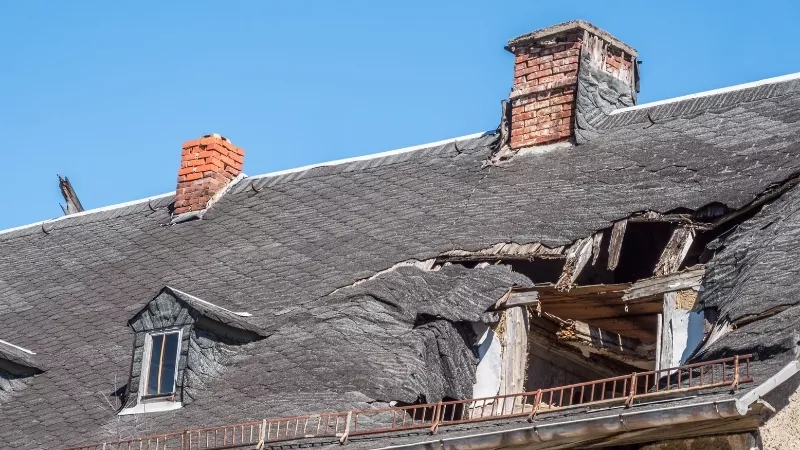
A stain after a monsoon storm, hail damage on an exposed slope, or a leak at the join between two roof systems — call and tell us what you are seeing.
Our newer tile and foam roof had desert dust collecting in the valleys, and the water was not draining properly. They cleared the valleys, checked the foam sections, and made sure the drainage was clear. The roof handles the monsoon much better now.
The hillside wind on our ridge had worked a few tiles loose, and the dust in the valleys was building up. They secured the loose tiles, cleared the valleys, and checked the flashing on the windward side. The roof feels solid when the wind picks up.
Our foam roof needed attention where the sun had worn the surface thin. They recoated the worn areas, sealed the seams, and checked the drains. The roof looks fresh, and the house stays cooler.
Tell us which part of North Scottsdale the home is in and where the water is showing. A call reaches us directly, and photos sent by email help before the visit.