Rainwater running down the flue
A missing or damaged cap lets monsoon rain straight down the flue, where it soaks the firebox and stains the ceiling below. We fit or repair the cap and check the crown, so the rain stays outside the stack.
Chimney repair in Scottsdale is mostly about water, not fire. A chimney is a tall stack of masonry or stucco standing on a roof, and every monsoon rain tries to get in at the top, through the cap and the crown, and at the joint where the chimney meets the roof. When the cap is cracked or the flashing has dried out, rainwater runs down the flue or behind the flashing and into the house — often showing up as a stain on the ceiling beside the fireplace. That is what chimney repair Scottsdale should give you: a clear picture of the roof, in plain words, before any work begins.
Call and tell us what the chimney looks like from the yard — a tilted cap, a stain beside the fireplace, smoke coming back into the room. We will talk it through and arrange a visit to look at the chimney and the roof around it.
Call +1 (480) 907-0320 →Open 24 Hours · Chimney Repair and Maintenance in Scottsdale, AZ, USA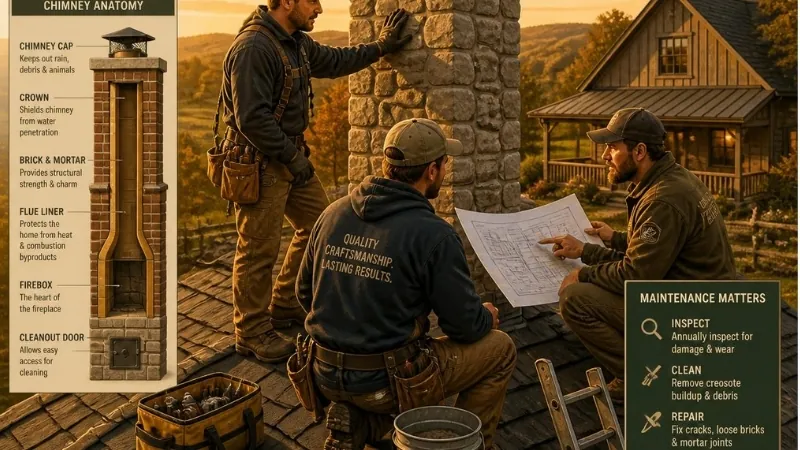
Scottsdale chimneys look solid, and most of them are. But the desert is hard on masonry: summer sun dries out mortar and sealant, daily heating and cooling moves the stack a little at a time, and monsoon rain hits the exposed top of the chimney harder than any other part of the house.
The damage usually starts small. A hairline crack in the crown lets rainwater into the top of the stack, where it soaks the masonry and works its way down. Mortar joints open up a little each year. The flashing where the chimney meets the roof dries and shrinks, and the gap it leaves is a straight path for rainwater into the attic. A chimney visit looks at all of it — the cap, the crown, the flue, the mortar, the flashing and the inside of the firebox — because a chimney is one system from the roofline down to the hearth.
A chimney has several parts, and each one can let water or smoke where it should not go. The four parts below are what a chimney visit usually covers on a Scottsdale home.
The cap keeps rain and animals out of the flue, and the crown is the slab on top of the stack that sheds water away from the masonry. A cracked crown or a missing cap lets rainwater straight into the stack, so both are checked and repaired before the monsoon season.
The flue carries smoke and fumes out of the house, and it needs to be clear and sound. We check the flue for soot build-up, blockages from nests and debris, and cracks in the liner, and we clear what should not be there.
Mortar joints open up with sun and heat, and bricks or stucco can crack and spall. Damaged joints are re-pointed and cracked masonry is repaired, so the stack stays sound and rainwater stays outside the wall.
Where the chimney meets the roof, flashing sheds water away from the joint. When the flashing dries, shrinks or lifts, rainwater runs behind it into the attic. We renew the flashing step by step so the joint is sealed as part of the roof.
It starts with what you have seen: a stain beside the fireplace, a smell when it rains, soot falling into the firebox, or a cap that looks loose from the yard. Each clue points at a different part of the chimney.
We look at the chimney from the roof — the cap, the crown, the mortar, the flue opening and the flashing at the base — and from inside the house, at the firebox and the ceiling beside it. The two views together show where the water or the smoke is going.
We talk through what needs doing, from a new cap to re-pointed mortar to renewed flashing, and we agree the scope in writing before any work begins. You see the photos, so you can see why each repair is there.
The work is done from the roof and, where needed, from inside the firebox, with the surrounding roof surface protected and the hearth covered. Mortar is matched to the existing stack so the repair blends in.
When the work is done we check the cap, the crown and the flashing once more, clear any debris from the roof below, and hand over the notes and photos. The chimney is ready for the first fire of the season.
Chimney work needs a steady hand and the right tools. These are the tools our team uses most often on Scottsdale homes.
A brush on rods clears soot, nests and debris from the flue, so smoke and fumes can leave the house properly and the flue can be checked for cracks.
Re-pointing is done by hand, with mortar matched to the existing stack, so the joints are sound and the repair blends with the masonry around it.
Flashing at the chimney base is shaped and fitted step by step, and sealant is used sparingly in the right places. A neat flashing sheds water away from the joint.
A small camera or mirror lets us look up the flue and behind the flashing without taking the chimney apart, so the check is thorough without being destructive.
The crown on top of the stack had cracked, and rainwater was soaking into the masonry and running down the inside of the chimney.
With the crown repaired and sealed, rainwater now runs off the top of the stack instead of soaking in.
The flashing where the chimney met the roof had dried and lifted, and monsoon rain was running behind it into the attic.
The flashing was renewed where the chimney meets the roof, and the attic below stayed dry through the next monsoon storm.
A bird had nested in the flue over the summer, and the first fire of the season filled the room with smoke.
With the nest cleared and a cap fitted, the flue draws properly again, and the cap keeps animals out.
Chimney problems in Scottsdale usually come down to water getting in or smoke not getting out. These are the three we are called about most often.
Ask a pro →A missing or damaged cap lets monsoon rain straight down the flue, where it soaks the firebox and stains the ceiling below. We fit or repair the cap and check the crown, so the rain stays outside the stack.
The flashing at the base of the chimney is a common leak point, because the chimney and the roof move differently as they heat and cool. We renew the flashing step by step, so the joint sheds water instead of letting it behind the flashing.
A blocked flue, a nest, or a damper that no longer closes properly can send smoke back into the room. We check the flue, clear what should not be there, and check the damper so the fireplace draws as it should.
Chimney work ranges from a new cap to a full re-point of the stack. For chimney repair Scottsdale, these are the four things that shape the work.
A tall chimney on a steep roof is harder to reach safely than a short one on a gentle slope, and the access shapes the job. We plan the access before anyone steps onto the roof.
A few open joints are a small job. Widespread cracking, spalling or a crown that needs rebuilding is a bigger one, and the only way to know is to look at the stack itself.
A flue that needs clearing is a small job. A cracked liner or a flue that needs relining is a bigger one, and we check the flue before agreeing the scope.
If the roof around the chimney base is worn, the flashing renewal may need more work than the chimney itself. We check the surrounding roof as we go and say what we find.
Scottsdale fireplaces sit quiet through the long summer, and the first cool evening is when most chimney problems show up. A quick check before that first fire is worth doing.
A cap that has shifted, tilted or gone missing over the summer is easy to spot from the yard. A missing cap means rain and animals have had the run of the flue all summer.
A stain or a damp patch on the ceiling beside the chimney is usually the first sign that the crown or the flashing has let water in during the monsoon.
A damper that has sat shut all summer can stick. Open it and close it once before the first fire, so you know it moves and the smoke has somewhere to go.
A small first fire shows whether the flue draws properly, without filling the room with smoke if something is blocked. If the smoke comes back into the room, stop and call us.
It usually means rainwater is getting in at the chimney — through a cracked crown, a missing cap, or flashing at the base that has dried and lifted. The water runs down the stack or behind the flashing and shows up on the ceiling beside the fireplace. We check the cap, the crown and the flashing to find which one it is.
A good rhythm is a look before the fireplace season, which also follows the monsoon, so any rain damage from the summer is caught before the first fire. Add a check if you notice a stain, a smell when it rains, or smoke coming back into the room.
Yes. The cap keeps monsoon rain out of the flue and stops birds and animals nesting in it over the summer, while still letting smoke escape. A chimney without a cap is open to every storm and every nesting bird.
The main factors are the height of the chimney and how safely it can be reached, the condition of the masonry and the crown, the state of the flue, and the flashing and roof around the base. We look at those four things on the roof itself, then talk through what is driving the work before anything is agreed.
Tell us what the chimney is doing — a stain beside the fireplace, a loose cap, smoke coming back — and we will look at the stack with you. Call any time.
Call +1 (480) 907-0320 →Rain was getting in around our chimney and leaving a damp mark on the living room wall. They found the flashing had pulled away from the brick and the mortar in a couple of joints had crumbled. They reset the flashing, repointed the joints, and the wall has stayed dry since.
The flue had a crack we could not see from the ground, and the cap was loose enough to rattle in the wind. They showed us photos from the roof, explained what each part does, and repaired the crack and the cap in one visit. It is good to know the chimney is sound again.
We had the chimney checked as part of a full roof look-over, and they found the flashing seal had dried out and split. They cleaned the joint, laid a fresh seal, and checked the brickwork around the base. Small job, done properly, and the fireplace room smells dry again.
If your chimney leaks, smokes back into the room or looks damaged, call us and describe what you are seeing. We will talk through what happens next and arrange a visit to look at the stack with you.