Active leak during a monsoon storm
Water coming through a ceiling or wall while it is still raining is the most common emergency. The first job is to stop more water getting in, then to trace the entry point once the roof is dry.
Emergency roof repair Scottsdale is for the moments that cannot wait for a routine visit: water coming through a ceiling during a monsoon storm, a section of roof torn by wind, a tree limb through the decking, or a flat roof ponding against a parapet. The first job is to stop more water getting in, usually with tarping and a temporary seal, and then to plan the lasting repair once the roof is dry and safe to work on. We are open 24 hours, so you can call in the middle of the storm, not only the morning after.
Water coming through the ceiling or a section torn by wind — tell us what you are seeing right now and we will talk through what to do before anyone climbs up.
Call +1 (480) 907-0320 →If calling is hard right now, write to roofrepairsscottsdale3@gmail.com with a photo of the damage
Open 24 Hours
Not every roof problem is an emergency, and knowing the difference saves a lot of worry. An emergency is anything letting water into the home right now, anything that has opened the roof to the sky, or anything that looks structurally unsafe — a sagging section, a large hole, or decking that has given way. A stain that appeared weeks ago and is dry today is urgent, but it is a repair visit, not a middle-of-the-night call.
Monsoon season in Scottsdale runs from 15 June to 30 September, and most emergency calls come in that window. Microbursts can peel back shingles and tiles in a single gust, hail can crack tile and dent metal, and a short, hard downpour can overwhelm a clogged scupper on a flat roof in minutes. The damage often looks small from the street while water is already running along the decking inside.
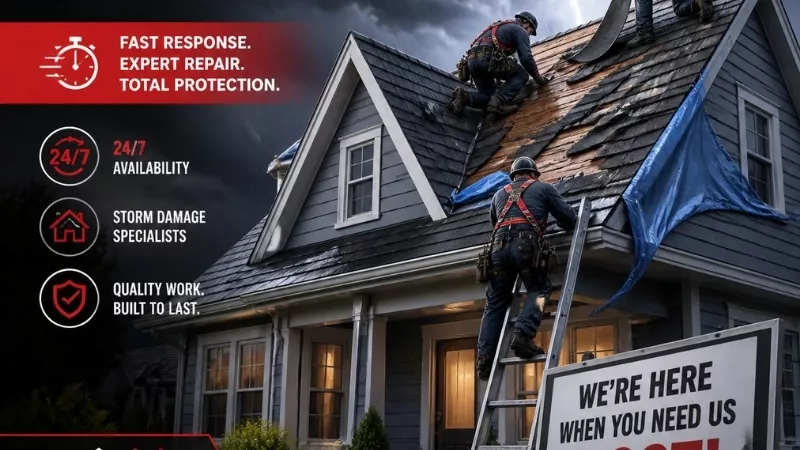
When you call, we ask where the water is showing, whether it is still coming in, and what kind of roof you have. If the roof is safe to reach, the first visit is about making it weather-tight: a tarp secured over the damaged area, a temporary seal at a failed flashing or boot, and a clear note of what the lasting repair will need. Climbing onto a wet roof in lightning or high wind is not safe, so in the worst of a storm the first step may be advice for inside the home until the weather eases.
An emergency visit has one aim: protect the home from more water while a proper repair is planned. These are the parts of that visit, in the order they usually happen.
A heavy tarp is laid over the damaged area and secured so wind cannot lift it, keeping rain out until the roof can be repaired properly. Tarping is a temporary shield, not a repair, and it is always followed by a plan for the lasting fix.
Where water is coming in through a failed flashing, pipe boot or seam, we seal the entry point from above once it is safe to reach, and we note the path the water took so the permanent repair covers the whole of it.
After the roof is made weather-tight, we look over the rest of the roof for lifted tiles, missing shingles, cracked caps and bent flashing that the storm may have left behind, and we photograph what we find.
You get a plain written note of what was damaged, what was done to make it safe, and what the lasting repair involves, so you can decide the next step without guessing and keep a clear record of it all.
Say where the water is showing, whether it is still coming in, and what the roof looks like from the ground. If a limb has fallen or a section looks sagging, say so — that changes how the visit is handled.
Move furniture and electronics away from the drip, put containers under it, and take photos of the water and any damage. If a ceiling is bulging with water, keep clear of it and do not poke it. Stay off a wet roof.
Once the weather allows safe access, the damaged area is covered and sealed so no more water gets in. This is the step that stops the damage growing while the lasting repair is planned.
With the roof dry, we walk the whole surface and the attic beneath, checking for lifted material, cracked tile, failed flashing and damp decking that the first visit could not see.
The permanent repair is talked through with you — what it covers, what materials it needs, and what order the work happens in — and it is booked once you have had time to decide.
Emergency work uses simple, strong materials. The aim is a weather-tight cover that holds until the real repair can be done well.
Thick tarps held down with battens and fasteners, laid so water runs off them instead of pooling on top.
Sealant applied at a failed flashing or seam to slow water entry until the detail can be rebuilt properly.
Used in the attic to find how far water has travelled, so the repair plan covers the whole damp area and not only the stain.
Photos of the damage and a written note of what was found, so nothing is forgotten between the emergency visit and the lasting repair.
Rain was coming through a light fitting during a monsoon downpour, and the ceiling below was starting to sag with water.
A tarp went over the failed valley flashing the same night the weather eased, and the lasting repair replaced the flashing and the damp underlayment beneath it.
A gust had lifted a run of ridge tiles and left underlayment open to the sky, with more rain forecast for the next day.
The ridge was covered and secured, and the lasting repair reset the ridge tiles and checked the tiles on either side for loosened fasteners.
A short, hard storm filled a parapet roof faster than its one scupper could drain, and water stood against the wall.
The scupper was cleared and the roof drained, and the lasting work added a second look at the cap flashing where water had been sitting.
Most emergency calls in Scottsdale fall into a few patterns.
Ask a pro →Water coming through a ceiling or wall while it is still raining is the most common emergency. The first job is to stop more water getting in, then to trace the entry point once the roof is dry.
Microburst gusts can lift tiles and peel shingles back, leaving underlayment exposed. A tarp over the open area keeps the next rain out until the covering is put back.
A limb down on a roof can crack tile, puncture membrane and bend flashing in one place. The visit covers the damage, checks the decking beneath, and makes the roof weather-tight.
The cost of emergency roof repair Scottsdale homeowners face has two parts: the urgent visit that makes the roof weather-tight, and the lasting repair that follows. Each is shaped by what the storm did and what kind of roof you have.
No figure is given on this page, because the range depends on the size of the damaged area, the roof material, and how much of the lasting repair the roof needs. We talk through both parts in plain words before work starts.
One lifted course of shingles is a small cover. A wide section of torn tile or a punctured flat roof needs more tarping and more repair work.
Tile, shingle, foam and membrane each need different temporary and lasting materials, and matching visible tile or shingle takes more care.
Steep slopes and wet surfaces limit what can be done safely during a storm, so the first visit may be tarping and advice, with the full look-over once the roof is dry.
A repair that only reseats flashing is one job. A repair that also renews underlayment or decking beneath is a wider one, and we show you what we find before deciding.
Old Town and Downtown Scottsdale have many parapet and low-slope roofs, and their emergencies are often about drainage: a scupper blocked by monsoon debris can fill a roof in one short storm, and water standing against a parapet finds its way through caps and seams. Tarping there is less common than clearing and sealing, but the urgency is the same.
Troon North and North Scottsdale sit higher and more exposed, so wind damage shows up first on ridges and on the windward slopes of large tile roofs. A gust that lifts a run of ridge tiles leaves a long strip of underlayment open, and that is the area the emergency visit covers first.
South Scottsdale has many older homes with older shingle and flat roofs, where one hard storm can open up wear that has been building for years.
Move things away from the drip, put containers under it, and take photos of the water and the damage. If a ceiling is bulging, keep clear of it. Do not climb onto a wet roof. Then call and describe what you see.
Tarping is temporary. It keeps rain out while the roof dries and the lasting repair is planned. Every tarping visit should be followed by a plan for the permanent repair.
It depends on the conditions. High wind, lightning and a wet roof can make climbing unsafe, and in that case the first help is advice for inside the home until the weather eases enough for safe access. Call anyway — we can talk through what to do now and plan the visit.
Water coming into the home right now, a section of roof open to the sky, a fallen limb through the roof, or a sagging section are all emergencies. A stain that is dry and has been there for weeks is urgent, but it is a repair visit rather than an emergency call.
Yes. Photos of the water inside, the stain, and the roof from the ground help a lot, and they are useful if you need to document the damage later. Take them from the ground and from inside the home.
Do not wait for the next storm to test the roof. Call, describe what you see, and we will talk through the next step together.
Call +1 (480) 907-0320 →Water started coming through the ceiling in the middle of a monsoon night, and we did not know what to do first. They talked us through moving the furniture and putting a bucket under the drip, then came out and covered the damaged area so no more rain could get in. The next step was a proper repair, and they explained every part of it.
A branch came down in the storm and punched a hole through the tiles over our bedroom. They covered the opening, checked the underlayment underneath, and replaced the broken tiles once the rain stopped. It was a frightening night, but the roof was watertight again before the next storm.
The leak showed up as a stain that grew bigger every time it rained, and then the ceiling started to sag. They got the water stopped, found the cracked flashing that caused it, and repaired the ceiling stain too. I wish we had called them when the stain first appeared.
Call and tell us where the water is showing and whether it is still coming in. If it is safe to talk through what to do inside the home, we will do that first, then plan the visit.