What Affects Roof Repair Cost Scottsdale: Key Factors
No figures, just the factors — what affects roof repair cost Scottsdale: size, material, damage, access, details, HOA rules and timing.
· Roof Repairs Scottsdale
Ask three Scottsdale homeowners what a roof repair involves and you will get three different answers — and all three may be right. A small flashing fix, a run of slipped tiles over aging underlayment, and a flat-roof seam repair are all roof repairs, but they involve different materials, different amounts of work, and different conditions on the roof. Understanding what affects roof repair cost Scottsdale homeowners encounter is the way to make sense of that variation: once you know the factors, you can compare quotes fairly, ask better questions, and plan the work with confidence. This guide explains those factors one by one, without figures, because the honest answer to how much a repair will be depends on your roof, not on a table.
The single most useful idea in this guide is that a roof repair is priced on its scope, not on its label. Two jobs that sound the same — two leaks, two tile repairs — can be very different once the roof is looked at properly. The factors below are what a roofer is weighing when they look at your roof and work out what the repair involves. Knowing them helps you understand the quote you receive, and helps you spot a quote that has missed something important.
Why no two repair jobs are priced the same
A roof is a system, not a surface. The covering you see from the street sits over underlayment, decking, flashing, vents and drainage, and a repair can involve any combination of those layers. A leak that shows as a stain on a bedroom ceiling may be caused by a single slipped tile, or it may be caused by underlayment that has aged across a whole slope, with the slipped tile only the place where the water finally got through. The first is a small repair. The second is a larger one. Both start with the same stain.
That is why a proper repair starts with finding the source, not with the stain. A roofer who traces the leak to its entry point, checks the condition of the materials around it, and looks at the roof as a whole will give you a clearer picture than one who quotes from the stain alone. The factors that follow are the ones that shape the scope of the work — and the scope is what shapes the price.
1. The size and pitch of the roof
Size is the most obvious factor, and it works in a straightforward way: a larger area of repair involves more material and more work than a smaller one. But size alone does not tell the story. The pitch — how steep the roof is — matters just as much. A steep roof is harder and slower to work on safely than a low-slope roof, and it needs more care with access and staging. A very low-slope or flat roof has its own demands, because water drains slowly and the details around edges and penetrations need more attention.
The shape of the roof matters too. A simple roof with two planes is a different job from a roof with many planes, valleys, dormers and changes in level. Each valley, each change in direction, is a place where water runs and where the detailing is more involved. When you are comparing quotes, check that they describe the same area and the same roof shape — a quote that covers one slope is not the same as a quote that covers the whole roof, even if the two sound similar.
2. The roofing material
Scottsdale homes wear a mix of materials — concrete and clay tile, asphalt shingle, metal, and foam or membrane on flat roofs — and each one changes the repair in its own way. Tile repairs often involve lifting and resetting tiles, which is careful, hands-on work, and may involve replacing a section of underlayment beneath them. If the tile profile or color needs to match the existing roof, sourcing matching tiles is part of the job, and in some neighborhoods the homeowners association has a say in which profiles are acceptable.
Shingle repairs are usually more straightforward in method but depend on the condition of the surrounding shingles: shingles that have become brittle in the sun are harder to work around without disturbing the neighbors. Metal roof repairs depend on the panel type and the seams, and may involve specialist flashings. Flat and foam roof repairs are about seams, coatings and drainage, and the condition of the coating across the whole roof affects whether a local repair will hold or whether a wider recoat is the sensible answer. The material is not just a surface — it sets the method, the matching question, and the way the repair ages.
3. How far the damage has spread
The most important factor of all is how far the damage has gone beneath the surface. A leak that has been running for a short time may have damaged only the underlayment in one small area. A leak that has been running quietly for months may have soaked insulation, stained decking, and softened the wood around it. The visible sign — a stain on a ceiling — looks the same in both cases. The work involved is very different.
This is why the inspection matters more than the first glance. A roofer tracing a leak will look in the attic for the path the water took, check the decking for damp and softness, and look at the condition of the materials around the entry point. If the decking is sound and the damage is local, the repair stays local. If the decking has been affected, or the underlayment has aged across a whole slope, the repair grows to match. A quote that is based on a proper look at the roof, including the attic side, is worth more than a quote based on a description over the phone, because the hidden extent of the damage is what most often changes the scope.
4. Access and roof shape
How easy the roof is to reach and work on affects the job more than most homeowners expect. A single-story home with a straightforward roofline and clear access around the house is a different working environment from a tall, multi-level home on a hillside, or a home where the roof can only be reached across landscaping, a pool area, or a narrow side passage. Steep sections, high ridges and areas that can only be reached from one side all add time and care to the work.
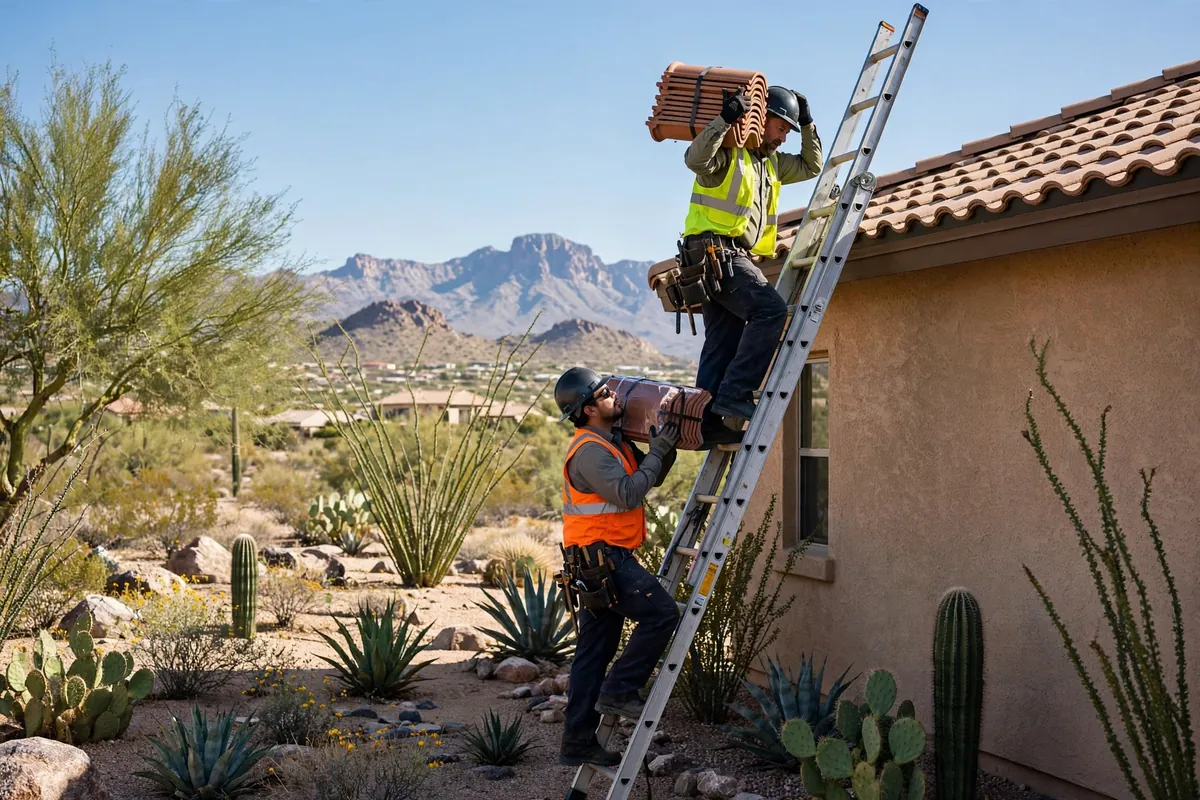
Access also affects how materials get onto the roof. Tiles are heavy and need to be moved carefully; on a tall or awkwardly placed home, that handling is a real part of the job. When you compare quotes, it is worth asking how access has been allowed for — a quote that has thought about it will describe the approach, while one that has not may grow once the work starts. The roof's shape and the home's setting are part of the repair, not separate from it.
5. Flashing, vents, skylights and other details
Roofs leak at details far more often than they leak in the middle of a plain surface. Flashing around chimneys, walls, skylights and vents, pipe boots where plumbing passes through the roof, valley linings where two planes meet — these are the places where water finds a way in, and they are also the places where a repair is most detailed. A repair that involves renewing flashing around a chimney is a different job from one that involves replacing a few tiles, because the flashing work involves shaping metal, sealing joins, and making the detail watertight from every angle.
The number of penetrations matters too. A roof with several skylights, multiple vents and a chimney has more details to check and more potential entry points than a plain roof of the same size. A good quote will name the details it covers — which flashing, which vent, which skylight — so you can see exactly what is included. If a quote mentions only the covering and says nothing about the details, ask about them, because the details are often where the real problem lives.
6. Lift-and-relay versus a full tear-off
On a tile roof, there is an important middle option between a small repair and a full replacement: lift-and-relay. The sound tiles are carefully lifted off, the aged underlayment beneath them is replaced, and the tiles are put back. It is a bigger job than a local repair, but it keeps the tiles you already have — which matters when the tile profile is hard to match or the homeowners association expects the roof to keep its existing look. A full tear-off, where everything comes off and the roof is rebuilt from the deck up, is a larger undertaking again, and it is the answer when the tiles themselves are at the end of their life or the decking needs work.
Which of these applies to your roof depends on the condition of the tiles and the underlayment, and it is a decision that should follow an inspection rather than precede it. A roof with sound tiles and aging underlayment is a lift-and-relay candidate. A roof with widespread tile damage and aged underlayment may be heading towards a full replacement. Understanding the difference helps you read a quote: if a quote proposes a tear-off, ask what was found that rules out a lift-and-relay, and if it proposes a small repair, ask whether the underlayment beneath it was checked.
7. HOA rules and matching materials
In many Scottsdale neighborhoods, the homeowners association has a role in roof work. Architectural review may govern which tile profiles and colors are acceptable, how a re-roof should look from the street, and what paperwork is needed before work begins. That process adds a step to the job, and it can affect the choice of materials: a tile that matches the existing roof and satisfies the association may need to be sourced specifically, while a tile that is easy to obtain but visibly different may not be approved.
Matching matters beyond the association too. A repair that uses a tile of the wrong profile or a visibly different color will stand out from the street, and it may not weather in the same way as the tiles around it. Ask how matching has been handled in the quote — whether the tiles are matched to the existing profile and color, and whether the association process has been allowed for. A quote that has thought about matching is a quote that has thought about the finished roof, not just the repair.
8. Timing and season
When the work happens also plays a part. Scottsdale's roofing year has a rhythm: mild spring and autumn weather, intense summer heat, and monsoon season from 15 June to 30 September. Work done in the mild months is often easier to schedule and to carry out, while monsoon season brings a surge of urgent work after storms, and the hottest weeks of summer are demanding for anyone working on a roof. None of this changes the materials, but it can change how quickly work can be scheduled and how the job is sequenced.
Timing also affects the roof itself. A repair done before monsoon season goes into the storms sound. A repair that waits until after the storms may have to deal with damage that the storms added in the meantime. If you have a choice, the period before monsoon season is the most useful time to deal with known problems, and the period after it is the time to check what the storms did. Planning around the seasons is not about chasing a cheaper month — it is about giving the repair the best conditions to be done well.
How to compare roof repair quotes fairly in Scottsdale
With all of these factors in mind, comparing quotes becomes a matter of comparing scope, not just the bottom line. Read each quote for the same things: what area of roof is covered, what materials are named, whether the underlayment and decking were checked, which details — flashing, vents, skylights, valleys — are included, how matching is handled, and what happens if hidden damage is found once the work starts. Two quotes that describe different scopes are not two prices for the same job.
Ask for the findings in writing, with photographs. A written report that shows what was found, where, and what is proposed is the clearest basis for a decision, and it protects both sides: you know what you are agreeing to, and the roofer knows what they are responsible for. If a quote is vague about scope, ask for it to be made specific. If two quotes differ a great deal, the difference is usually in the scope — one of them is covering something the other has missed, or one of them has found damage the other has not looked for. The question to ask is always which scope matches what your roof actually needs.
Small repairs now versus bigger work later
The last factor is time itself. A small repair done promptly — a slipped tile reset, a flashing re-sealed, a scupper cleared — is a small job. The same problem left through a monsoon season can become a leak, and a leak left running can become damaged decking, stained ceilings and a much larger repair. Roof work has a habit of growing when it is postponed, not because roofers want it to, but because water does not wait.
That is the real argument for dealing with roof problems early, and for the twice-yearly checks that catch them: the work stays small while the problem is small. If you are unsure whether a problem is small or not, an inspection will tell you, with written findings and photographs. To understand the repair side, start with our roof repair in Scottsdale page, and if the roof is at the stage where replacement is part of the conversation, our roof replacement in Scottsdale page explains how that decision is made. Tile roofs have their own notes on our tile roof installation page, and the hillside homes of Desert Mountain, where access and exposure shape the work, are covered on our roof repair in Desert Mountain page. If your question started with a leak, our guide on why your roof is leaking in Scottsdale traces the common causes to their source.