Signs You Need Emergency Roof Repair Scottsdale: 5 to Watch
Water inside, a sagging roof or missing tiles after a storm — the five signs that mean your Scottsdale roof needs help now.
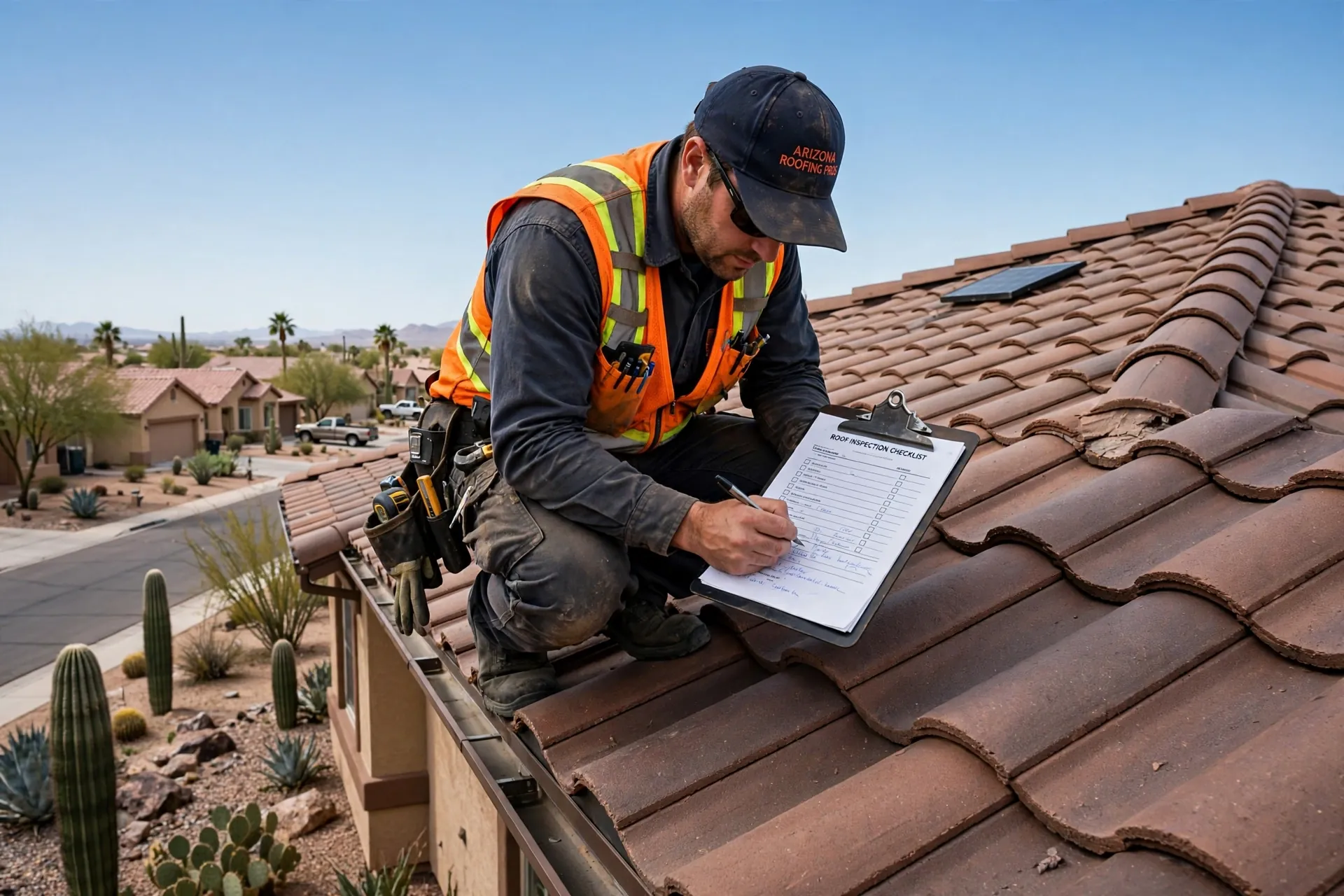
· Roof Repairs Scottsdale
When water is coming through your ceiling in the middle of a monsoon night, there is no time to wonder whether the problem can wait until morning. The signs you need emergency roof repair Scottsdale homeowners should act on are the ones that show water is already inside, the structure is under strain, or the roof covering has opened up to the next storm. This guide walks through those signs one by one, in plain language, so you can tell the difference between a worry and a genuine emergency — and know what to do in the first hour.
A roof emergency is not defined by how the roof looks from the kerb. It is defined by what the damage is doing to your home right now. A few slipped tiles on a dry day are a repair job to book soon. The same slipped tiles with water dripping into a bedroom during a storm are an emergency. The five signs below are the ones that mean you should pick up the phone rather than put the problem on a list.
What counts as a roof emergency in Scottsdale?
Scottsdale roofs live a harder life than roofs in milder places. Summer sun bakes the surface day after day, the temperature swings between hot afternoons and cool desert nights, and then monsoon season arrives from 15 June to 30 September with sudden downpours, strong wind gusts and hail. A roof that has been quietly wearing out under the sun can fail all at once when a storm hits it. That is why emergency calls in Scottsdale cluster around storms — and why the same storm can leave one house untouched and the next one with water in the hallway.
An emergency is any roof problem that is letting water in, threatening the structure, or leaving the inside of your home open to the weather. If you are unsure, treat it as urgent and get a professional view. A quick look from someone who knows roofs is always better than a week of water soaking into insulation, plasterboard and timber while you wait to see if it dries out. Water rarely dries out on its own inside a roof. It travels, it spreads, and the damage it causes grows quietly behind ceilings and inside walls.
1. Water coming into your home
Active water inside the house is the clearest of all the signs you need emergency roof repair Scottsdale residents face. A drip from a ceiling light fitting, a spreading stain on a bedroom ceiling, water running down an inside wall, or a puddle on the floor after rain all mean the roof covering has been breached and water has found a path through. The stain you can see is almost never the whole story. Water enters at one point, travels along the decking and rafters, and shows itself somewhere else entirely — sometimes a whole room away from the actual hole.
Do not assume a small drip is a small problem. A slow drip that only appears in heavy rain can still be soaking insulation and timber every time it rains, and the damp patch you see today can become a sagging ceiling or a mould problem in the weeks that follow. If the water is near wiring, light fittings or sockets, switch off the affected circuit at the breaker if you can do so safely and keep everyone away from the wet area. Mop up what you can, put a bucket under the drip, and move furniture, rugs and electronics out of the way.
Where the water shows up first
In Scottsdale homes, leaks often show up first around ceiling lights, along the line where a wall meets the ceiling, or in the corners of rooms on the upper floor. On flat-roofed homes in Old Town and South Scottsdale, water may appear as a stain in the middle of a ceiling where a scupper or parapet has let water pond and push through. On tile roofs, the stain may sit well away from the slipped or cracked tile that let the water in, because water runs down the underlayment before it finds a gap. That is why tracing a leak takes a proper look at the roof itself, not just at the stain inside.
2. A sagging or dipped section of roof
Stand back from your home and look at the roofline. It should run in straight, even lines. If part of the roof dips, sags or looks wavy, that section needs attention straight away. A sag can mean the decking beneath the covering has been weakened by long-term moisture, or that the structure underneath is carrying more load than it should — for example where water has been ponding on a flat roof, or where a previous repair added weight to an already tired section.
A sagging roof is not a cosmetic problem. It changes how water runs off the roof, so rain collects in the dip instead of draining away, and the standing water makes the sag worse with every storm. If you can see a dip from the ground, do not climb up to look closer. Stay on the ground, keep the rooms below that section clear if water is coming in, and arrange for a professional inspection. A sag that is growing, or a ceiling below it that is bowing or cracking, is a reason to act the same day.
3. Large areas of missing, slipped or broken covering
After a storm, walk around your home and look up. On a tile roof, look for tiles that have slipped down, cracked, or gone missing entirely, leaving dark patches where the underlayment shows through. On a shingle roof, look for shingles that have lifted, curled back, or blown off, and for bare patches along ridges and edges where the wind catches first. On a flat or foam roof, look for torn or lifted coating, seams that have opened, and any area where the surface looks scuffed or punctured by flying debris.
A single cracked tile is a repair to book soon. A run of missing tiles, a whole ridge line disturbed, or a section of covering torn away is an emergency, because the next rain will go straight through to the underlayment and beyond. Tile underlayment is the real waterproof layer on a tile roof, and it ages — often after 15 to 25 years in this climate. When tiles go missing over old underlayment, there is very little standing between your home and the rain. If you find broken tiles or shingle pieces in your garden after a storm, that is your roof telling you something came off it, and the roof needs a look before the next weather arrives.
4. Damage you can see from the street after a storm
Not every emergency is obvious from inside the house. Sometimes the first sign is what you see from the driveway: a branch lying across the roof, a dented or torn section where debris struck, flashing that has peeled away from a chimney or wall, or a gutter hanging loose and pulling away from the fascia. Storm debris can puncture a roof without leaving any sign inside for days, until the next rain finds the hole.
Monsoon storms in Scottsdale bring more than rain. Microbursts — sudden, powerful downdrafts — can drive wind and debris sideways across a roof, lifting edges that rain alone would never move. Hail can crack tiles and dent metal flashings, and the cracks may be small enough to miss from the ground while still letting water through. After any storm with hail or strong wind, take a slow walk around your home with a pair of binoculars and look at the roofline, the ridges, the valleys and the edges. If anything looks out of place, torn, dented or displaced, it is worth a closer professional look rather than a shrug.
5. Daylight, debris or granules where they should not be
Some signs show up inside the roof space rather than on the roof itself. If you go into the attic or a roof void after a storm and see daylight coming through, that is a hole in your roof, and it needs attention before the next rain. If you find debris, dust or leaves inside the attic that were not there before, something has opened up. On shingle roofs, a sudden heavy load of granules in the gutters — the sand-like coating that protects shingles from the sun — is a sign that the surface has been scoured by hail or heavy rain and the shingles are losing their protection.
Granule loss matters in Scottsdale because the sun is the everyday enemy of a shingle roof. Shingles that have lost their granules age much faster under ultraviolet light, curling and cracking sooner than they should. A gutter full of granules after one storm may look harmless, but it is a useful clue that the roof took a battering. Pair it with a look at the shingles themselves: if they look patchy, thin or uneven in colour, the storm may have done more than you think.
What to do in the first hour
When you find one of these signs, the first hour matters more than the first week. Start inside the house. Move furniture, bedding and electronics away from the wet area, put buckets or large containers under drips, and lay towels along the path of any water running down a wall. If water is coming through a ceiling and the ceiling is bulging, do not stand under it — a waterlogged ceiling can give way. If you can safely place a container beneath it and pierce the lowest point of the bulge with a small hole to let the water drain in a controlled way, that can relieve the pressure, but only if you can do it without standing in water near wiring.
Next, take photographs. Photograph the water inside, the stain on the ceiling, the missing tiles or the debris on the roof, and the outside of the house showing where the damage is. Good photos taken on the day are useful later when you are explaining the problem and keeping a record of what happened. Note the date and the time, and write down what the weather was doing when you first noticed the problem. Then call for help. Do not climb onto a wet roof, do not climb a ladder in high wind, and do not try to walk on a tile roof — tiles break underfoot, wet surfaces are slippery, and a fall from a roof is a far bigger emergency than a leak.
Tarping and making safe versus a lasting repair
When a roofer arrives at an emergency, the first job is usually to make the roof safe and watertight, not to finish the permanent repair on the spot. That often means covering the damaged area with a tarp, securing loose covering, and sealing the most exposed points so that the next rain cannot get in. This is sometimes called making safe, and it is an important step in its own right. A roof that has been properly made safe can wait for the lasting repair to be planned and done well, with the right materials matched to the roof.
There is a real difference between a quick cover and a proper fix, and it is worth understanding before anyone starts work. A tarp stops water getting in today. A lasting repair deals with the cause: the failed underlayment beneath a run of slipped tiles, the flashing that has lifted away from a wall, the scupper that is blocked and ponding water on a flat roof. The lasting repair may involve lifting and resetting tiles, replacing a section of underlayment, renewing flashing, or resealing a foam seam. Ask what the temporary cover is protecting and what the lasting repair will involve, so you know where you stand.
How monsoon season changes the picture
Monsoon season runs from 15 June to 30 September, and it changes the rules for Scottsdale roofs. Storms arrive fast, often in the late afternoon, with heavy rain in a short burst, strong gusts and sometimes hail. A roof that coped fine with light winter rain can be overwhelmed by a monsoon downpour, because the sheer volume of water in a short time finds every weak point at once — a valley that drains slowly, a scupper that is half-blocked with leaves, a low spot on a flat roof where water ponds.
The other monsoon habit worth knowing is that storms often come in runs. One storm damages a roof, and the next storm, a day or two later, is the one that lets the water in. That is why a check after the first storm matters even if nothing is leaking yet. If you find slipped tiles or a torn flashing after the first storm of a run, getting it made safe before the next one arrives can be the difference between a repair and a much bigger job. Before monsoon season starts, a roof inspection is one of the most useful things a Scottsdale homeowner can arrange — it finds the weak points while the weather is still dry.
Tile, flat and foam roofs: emergencies look different
Scottsdale has a mix of roof types, and the same storm shows up differently on each of them. On a tile roof, the emergency is usually a slipped or broken tile exposing old underlayment, or a valley where debris has piled up and water has backed under the tiles. Tiles themselves are tough, but they rely on the underlayment beneath them, and once that layer has aged past its best, a small amount of tile damage can let in a surprising amount of water.
On a flat roof with parapet walls, the emergency is often about drainage. Scuppers — the openings that let water off a flat roof — can block with leaves and dust, and when they do, water ponds. Ponding water is heavy, it finds seams and joints, and it can push through a coating that looked fine in dry weather. On a foam roof, the emergency is often a seam that has opened or a coating that has worn thin and split under the sun, leaving the foam beneath exposed to water. Each roof type has its own weak points, and that is why a good emergency response starts by identifying the roof type and looking at the places that type is known to fail.
Emergency roof repair in Scottsdale is the service that deals with these urgent situations, and it starts with finding the source of the water rather than just covering the stain. If you are weighing up whether your roof needs that kind of response, the five signs above are your guide: water inside, a sag, a large area of covering gone, visible storm damage, or daylight and debris where they should not be. Any one of them is enough to make the call.
Mistakes that turn a small problem into a big one
The most common mistake is waiting to see if it gets worse. Roof problems do not get better on their own. A leak that only shows in heavy rain will show in lighter rain once the materials around it have soaked through. A few missing tiles will not be replaced by the next storm — the next storm will take more. The second mistake is climbing up to fix it yourself. Tile roofs are easy to damage further underfoot, wet roofs are dangerous, and a patch applied to the wrong place can trap water and hide the real problem while it grows underneath.
The third mistake is covering the stain inside without dealing with the roof. Repainting a water-stained ceiling, or sealing a crack in the plaster, hides the symptom and leaves the cause in place. The water will come back, usually in the same place, and the materials behind the fresh paint will be wetter than before. Fix the roof first, let everything dry out properly, and only then repair the inside. The fourth mistake is forgetting the gutters and drainage. A blocked gutter or a scupper full of leaves can send water back under the roof edge, and no amount of tile work will fix a leak whose real cause is water with nowhere to go.
When to call Roof Repairs Scottsdale
If you recognise any of the five signs in this guide, call Roof Repairs Scottsdale on +1 (480) 907-0320. Describe what you can see — where the water is, what the roof looks like from the ground, and when the problem started — and we will talk through what to do next. If the problem is urgent, the priority is making the roof safe and stopping the water. If it turns out to be a repair that can be planned, we will say so honestly and help you plan it properly.
For a wider look at what storm damage can look like on a Scottsdale roof, read our guide on how to identify roof damage after a storm in Scottsdale. If water is already coming in and you need to know how the source is found, our roof leak repair service explains how leaks are traced to their source. And if the damage came from a storm, our storm damage repair page covers the repair side of the same problem. Homes with flat parapet roofs in the Old Town area face their own version of these emergencies, which is why our roof repair in Old Town Scottsdale page looks at the parapet and scupper problems that are common there.
Frequently Asked Questions
1. How do I know if I need emergency roof repair? Water coming into your home, a sagging section of roof, a large area of covering missing after a storm, or daylight visible from the attic are the clearest signs. If water is already inside, treat it as urgent and call for help rather than waiting to see if it stops.
2. What should I do first if my roof is leaking? Move furniture and valuables away from the wet area, put a container under the drip, and take photographs of the water inside and the roof from the ground. Switch off the affected circuit if water is near wiring, and do not climb onto a wet roof.
3. What is the difference between making a roof safe and repairing it? Making safe means covering the damaged area and stopping the water, usually with a tarp and by securing loose covering. A lasting repair deals with the cause, such as failed underlayment or lifted flashing, and is planned once the roof is dry and can be looked at properly.
4. Can I repair my roof myself after a storm? Small checks from the ground are fine, but roof work itself is best left to a professional. Tiles break underfoot, wet roofs are slippery, and a patch in the wrong place can trap water and hide the real problem while it grows.
5. How often should I have my roof inspected? At least once a year, and after any severe storm. A check before monsoon season and another after it is a sensible rhythm in Scottsdale, because storms arrive in runs and the second storm is often the one that lets water in.